
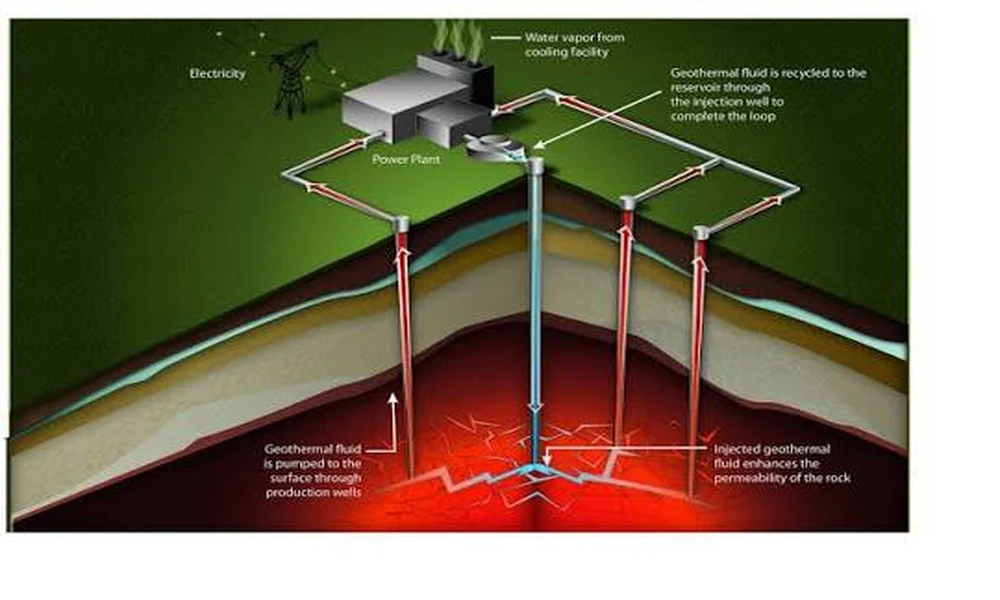

As the global energy sector explores a broader range of low-carbon resources, geothermal energy is attracting increasing attention. Heat stored beneath the Earth’s surface can provide a reliable source of energy, but understanding whether a geothermal project is commercially viable requires detailed investigation.
This is where geothermal resource assessment becomes essential. By analysing geological, geophysical, and engineering information, specialists can estimate the potential of a geothermal resource and help developers make informed decisions about exploration and development.
What Is Geothermal Resource Assessment?
Geothermal resource assessment is the process of evaluating the quantity, quality, location, and development potential of heat stored within the Earth’s subsurface.
Unlike some renewable energy resources, geothermal systems are highly dependent on underground geological conditions. Temperature, permeability, fluid availability, reservoir characteristics, and geological structure can all influence the feasibility of a project.
A comprehensive assessment brings together information from multiple disciplines to develop an understanding of the geothermal system and its potential for energy production.
Why Is Geothermal Assessment Important?
Geothermal projects can require significant investment before commercial energy production begins. Exploration drilling, infrastructure development, resource testing, and plant construction all involve financial and technical risks.
Early-stage assessment can help developers understand these risks before committing substantial capital. By identifying the characteristics and uncertainties of a potential resource, project teams can make more informed decisions about whether further exploration is justified.
A detailed assessment can also help establish realistic expectations regarding potential energy output and future development requirements.
Key Components of a Geothermal Resource Assessment
Several types of information may be considered during an assessment.
Geological Analysis
Understanding the geological setting is fundamental to evaluating a geothermal system. Specialists may examine rock types, faults, fractures, volcanic features, and other geological structures that could influence the movement and storage of geothermal fluids.
Geological mapping and interpretation can help identify areas that warrant further investigation.
Geophysical Data
Geophysical surveys can provide valuable information about subsurface conditions without requiring extensive drilling. Depending on the project, techniques may be used to investigate electrical resistivity, seismic characteristics, gravity, magnetics, and other physical properties.
Combining geophysical information with geological observations can help develop a more complete model of the subsurface.
Temperature and Fluid Analysis
Temperature is one of the most important considerations when assessing a geothermal resource. The temperature and chemistry of geothermal fluids can provide important information about reservoir conditions and potential development strategies.
Data from existing wells, surface manifestations, temperature measurements, and fluid sampling can all contribute to the assessment.
Reservoir Evaluation
A geothermal reservoir must have suitable characteristics for sustainable energy production. Factors such as permeability, porosity, fluid flow, temperature distribution, and reservoir size can influence project performance.
Specialists use available data to develop conceptual and, where appropriate, numerical models of the reservoir. These models can help evaluate possible production scenarios and identify areas of uncertainty.
Estimating Geothermal Potential
One of the primary objectives of geothermal resource assessment is to estimate the potential energy that could be extracted from a resource.
However, resource potential should not be confused with commercially recoverable energy. A geothermal system may contain a substantial amount of heat while still presenting technical or economic challenges that limit development.
Assessments therefore need to consider both subsurface potential and practical development factors. Drilling costs, infrastructure requirements, technology, environmental considerations, and expected energy prices may all influence the commercial outlook.
Managing Uncertainty
Uncertainty is an inherent part of geothermal exploration. Much of the information required to understand a reservoir comes from indirect measurements or limited subsurface data.
A robust assessment should therefore identify uncertainties rather than presenting estimates as absolute outcomes.
Scenario analysis and probabilistic approaches can be useful for understanding how different geological and engineering assumptions could affect resource estimates. This provides decision-makers with a clearer picture of potential outcomes and associated risks.
Supporting Investment and Development Decisions
The results of a geothermal assessment can support a variety of important decisions. Developers may use the findings to determine whether additional exploration is warranted, where future wells should be located, or what type of development strategy may be appropriate.
Investors and other stakeholders can also use technical assessments when evaluating the potential risks and opportunities associated with a geothermal project.
Independent technical expertise can be particularly valuable when significant investment decisions depend on the quality and interpretation of subsurface information.
The Future of Geothermal Development
Advances in drilling, reservoir engineering, geophysical technology, and data analysis are expanding the possibilities for geothermal energy development.
At the same time, improved resource assessment techniques are helping developers better understand geothermal systems before making major investment decisions.
As interest in reliable low-carbon energy continues to grow, accurate geothermal resource assessment will remain an important part of identifying viable projects and managing exploration risk.
Geothermal energy has significant potential, but successful development depends on understanding what lies beneath the surface. Geological conditions, reservoir characteristics, temperature, fluid behaviour, and economic factors all need to be considered.
A thorough geothermal resource assessment provides a structured way to evaluate these factors, estimate resource potential, identify uncertainty, and support development decisions.
By combining multidisciplinary expertise with high-quality data and appropriate modelling techniques, developers can approach geothermal opportunities with greater confidence and a clearer understanding of their potential.